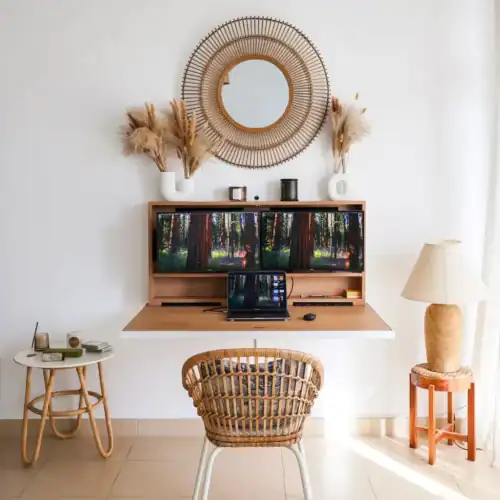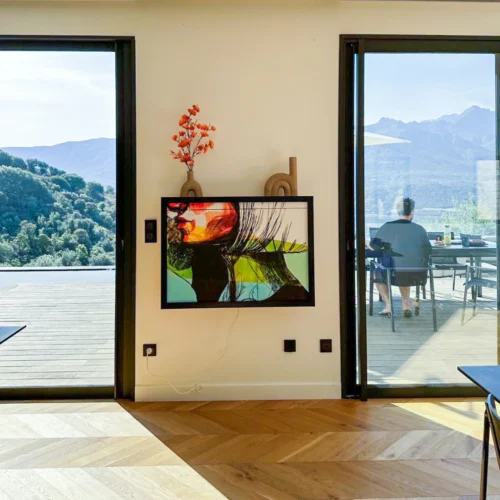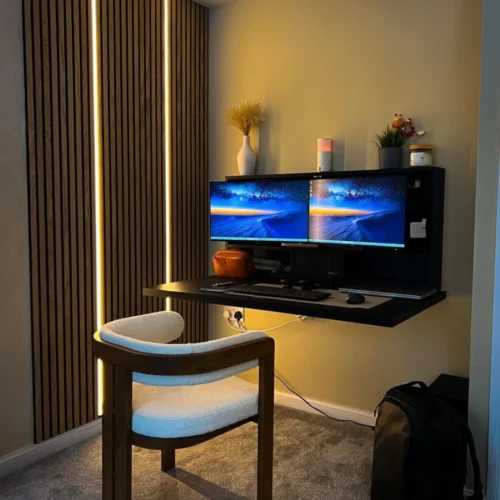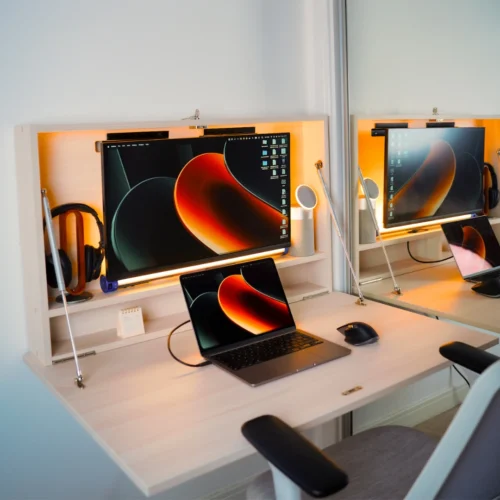
The traditional desk was the only option for decades, but as living spaces shrink and remote work spreads, the fold-away wall desk has become a serious contender worth a fair comparison — not just a "temporary fix" as it used to be seen.
Space: a clear win for the wall desk
A traditional desk occupies its full footprint around the clock, whether you're using it or not. A fold-away wall desk, on the other hand, disappears into a depth of just 15 to 20 cm when closed, freeing up the entire room for other uses — exercise, hosting guests, even an extra bed.
Long-term cost
A traditional desk may look cheaper at first glance, but once you account for the cost of "wasted space" — especially in cities where rent is calculated per square meter — a wall desk becomes the smarter investment, since it frees up usable space for other purposes at no extra cost.
Comfort and work environment
- Traditional desk: more stability, a fixed work surface that doesn't need daily opening and closing.
- Wall desk: gives you a clear ritual to start and end your workday, which helps psychologically separate work time from downtime — especially for remote workers.
Aesthetics
Modern wall desks, like DarDesk's models, are designed to look like an elegant piece of furniture even when closed — not just a "practical fix" that sacrifices style. That makes them suitable for living rooms, not just dedicated office rooms.
When does a traditional desk still win?
If you have a fully dedicated office room and don't need that space for anything else, a traditional desk can remain a simple, comfortable choice. But for most homes and apartments in major cities, where every square meter counts, the fold-away wall desk is the smarter option.
The real question isn't "which desk looks nicer?" but "which desk respects my space and my lifestyle?"
See the difference for yourself
Three DarDesk sizes built for every kind of home and office.